Nora Bzheta
Si pllum
05.06–04.07.2025
Curated by Stefano Romano
Some animals migrate, including a certain type of pigeon (the wood pigeons) that move during the winter and autumn:
They move from one place on the planet to another, indifferent to what we humans have called “borders” and which, again we humans, have used to define, divide and catalogue ourselves according to religions, customs and races.
For animals, the places they cross are simply territories where they can pause, feed, and reproduce.
In this way, every territory becomes home.
Pausing, feeding, reproducing, and moving are also among the basic actions of human beings and, together with social interactions, they form a set of behaviors that transform us humans both physically and in terms of our perception of the world, building our identity.
Nora Bzheta’s work is based precisely on this idea of endless transformation. The material of her works is in constant flux because it contains this journey through territories that become a fluid, uninterrupted substance—without borders of meaning or of state—shifting from solid to liquid in a continuous renegotiation of our sense of belonging and of our very being.
A transformation of which this text is also part, which from the expression of an interpretation becomes a list of keywords that the audience can freely combine, transform, erase, or expand at will:
Water
Clay
Body
Mud
Rebirth
Rehydration
Transformation
Fly
Roots
Air
Animals
Humans
Escape
Refuge
Remembrance
Cyclical
Spiral in motion
Process
Encounter
Underground
Hidden
Personal mythology
Otherness
Dreaming
Identity
Sacrifice
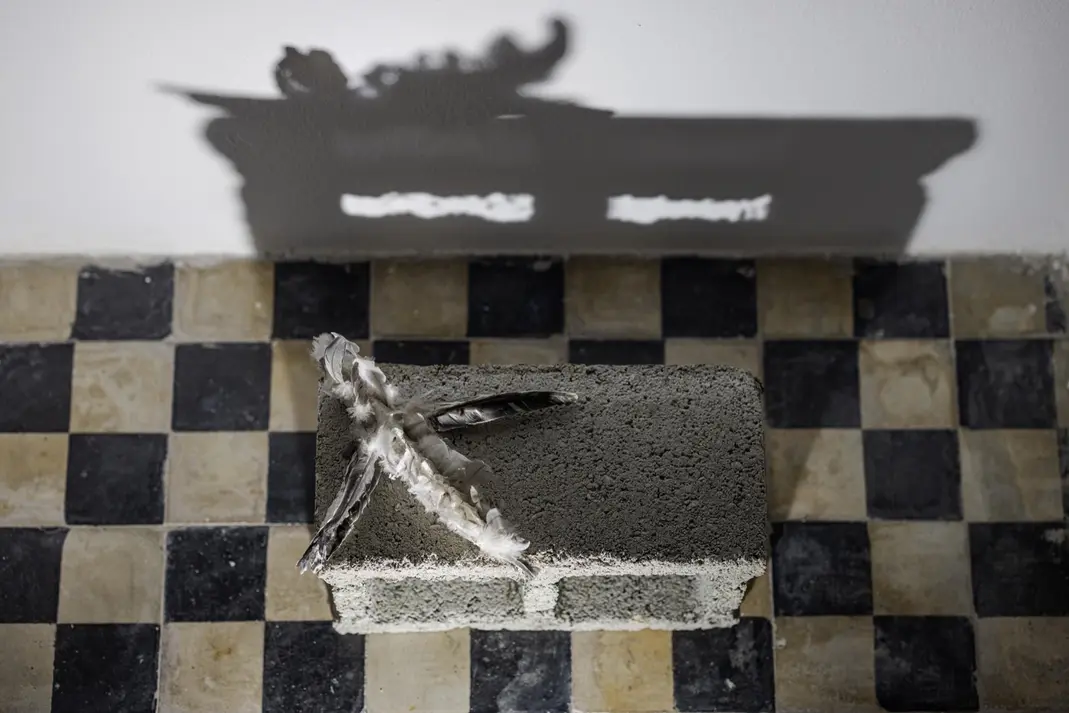
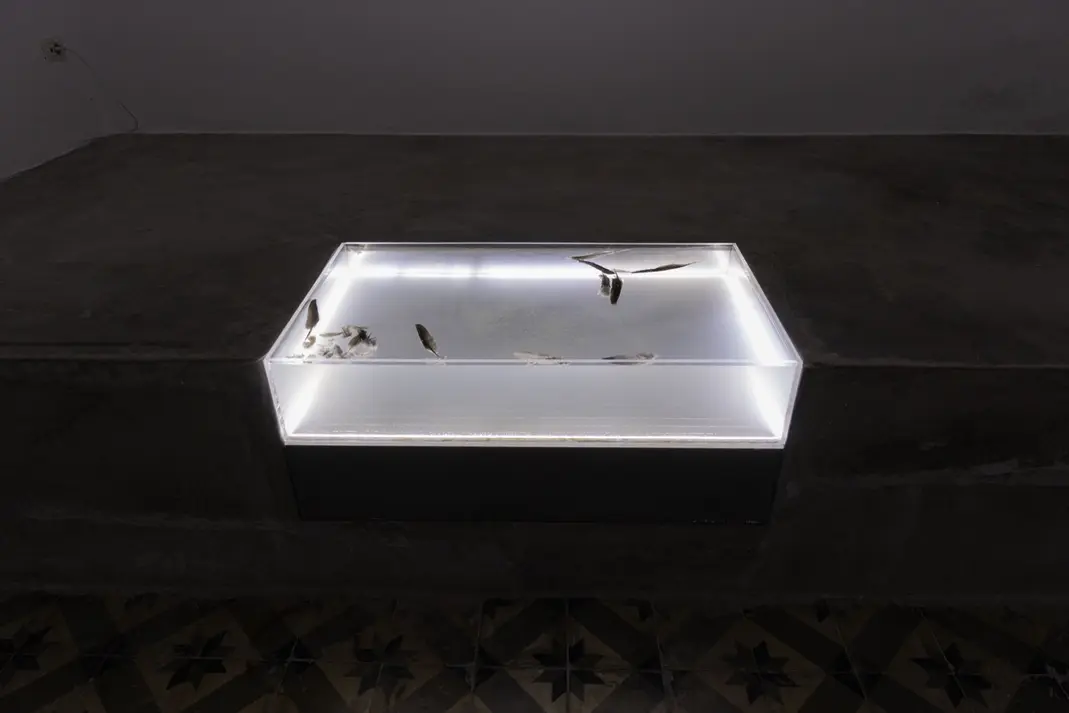
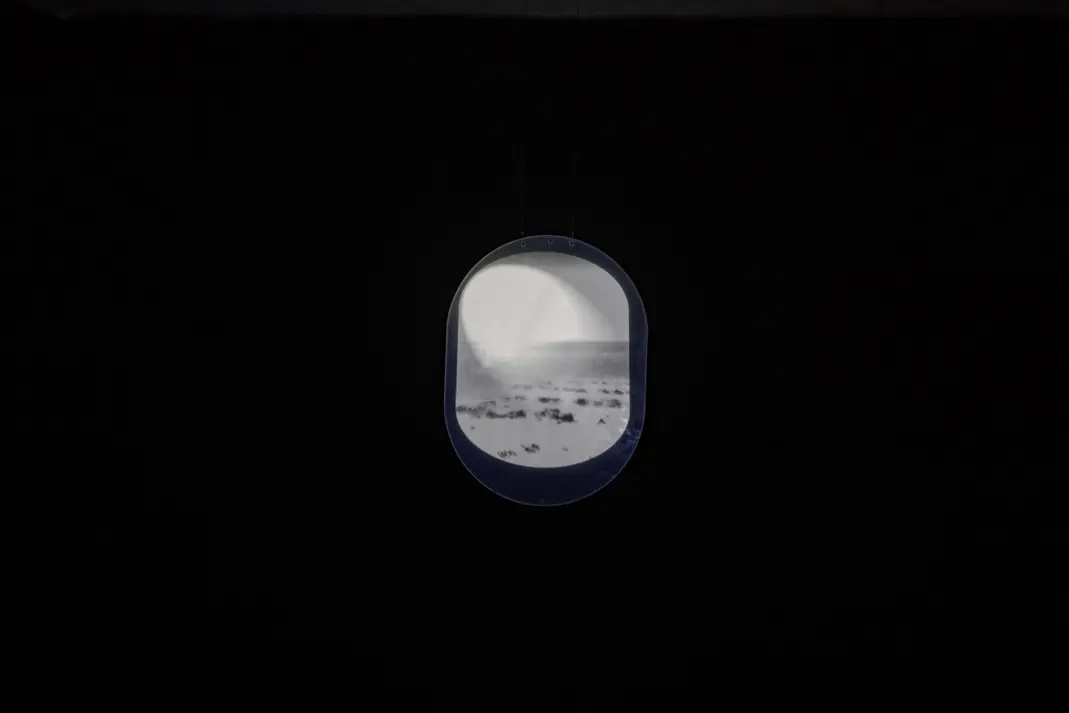
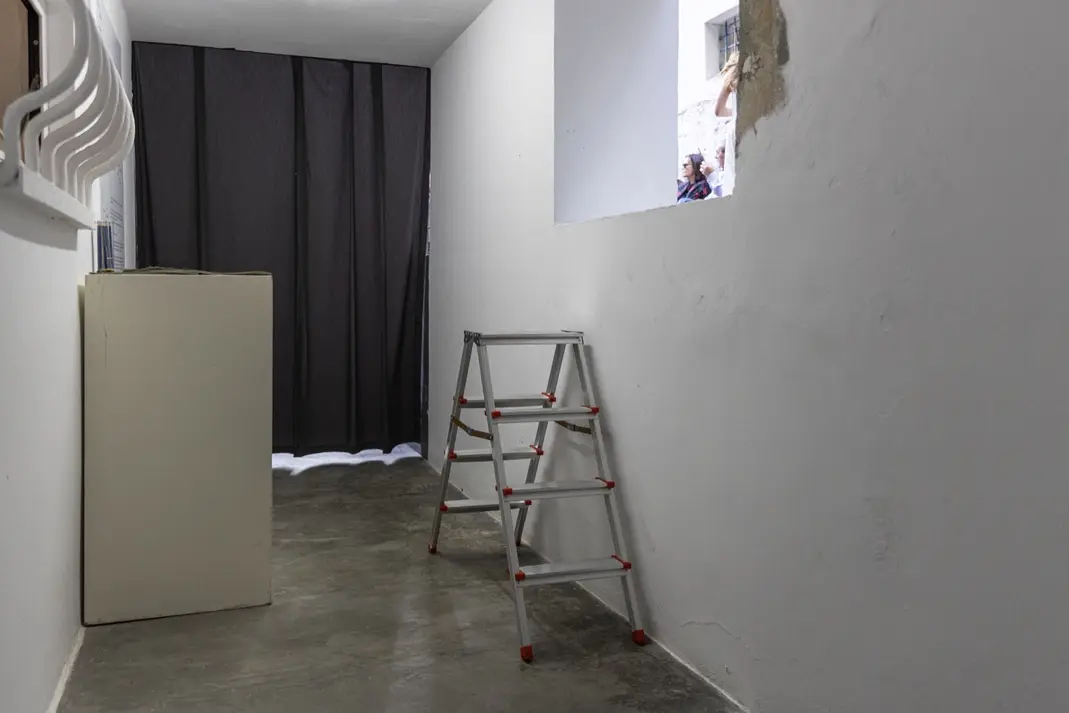
Si Pllum
Një ekspozitë nga Nora Bzheta
Kurator: Stefano Romano
Disa kafshë migrojnë, përfshirë edhe një lloj pëllumbi (pëllumbat e egër), që lëvizin gjatë dimrit dhe vjeshtës:
Ata zhvendosen nga një vend i planetit në një tjetër, të pandikuar nga ato që ne njerëzit i kemi quajtur “kufij” dhe që, po ne njerëzit, i kemi përdorur për të përcaktuar, ndarë dhe kataloguar veten sipas feve, zakoneve dhe racave.
Për kafshët, vendet që kalojnë janë thjesht territore ku mund të ndalojnë, të ushqehen dhe të riprodhohen.
Në këtë mënyrë, çdo territor bëhet shtëpi.
Ndalesa, ushqimi, riprodhimi dhe lëvizja janë gjithashtu ndër veprimet themelore të qenieve njerëzore dhe, së bashku me ndërveprimet sociale, formojnë një grup sjelljesh që na transformojnë si fizikisht, ashtu edhe në mënyrën se si e perceptojmë botën, duke ndërtuar identitetin tonë.
Puna e Nora Bzhetës bazohet pikërisht mbi idenë e transformimit të pandërprerë. Materiali i veprave të saj është në rrjedhje të vazhdueshme sepse përmban këtë udhëtim përmes territoreve që bëhen një substancë fluide, e pandërprerë, pa kufij domethënieje apo shtetësie, duke kaluar nga gjendja e ngurtë në atë të lëngët në një rinegocim të vazhdueshëm të ndjesisë sonë të përkatësisë dhe të qenies sonë.
Një transformim i cili përfshin edhe këtë tekst, i cili nga shprehje e një interpretimi shndërrohet në një listë fjalësh kyçe që publiku mund t’i kombinojë, transformojë, fshijë ose zgjerojë si të dëshirojë:
Ujë
Argjilë
Trup
Baltë
Rilindje
Rihidratim
Transformim
Fluturim
Rrënjë
Ajër
Kafshë
Njerëz
Arratisje
Strehë
Kujtesë
Ciklike
Spiralë në lëvizje
Proces
Takim
Nëntokësore
E fshehur
Mitologji personale
Tjetërsi
Ëndërrim
Identitet
Sakrificë